
Floor Care
Commercial floor care in Santa Clara
Strip and wax, burnishing, concrete scrubbing and stone care keep Santa Clara lobbies, breakrooms and corridors bright, scheduled at night zone by zone.
Cleaning the floor surface
Routine mopping and machine scrubbing lift everyday soil from hard floors. Concrete floors receive scrubbing, and natural stone receives material-specific cleaning and routine care.
Burnishing and polishing bring back shine, recoating adds a fresh layer of finish, and worn resilient tile can be stripped and waxed.
Vacuuming provides routine carpet upkeep. Extraction and spot treatment are detailed on the Commercial Carpet Cleaning page.
Corridors, lobbies and break areas wear at different rates. Periodic treatments are scheduled zone by zone so the busiest floors are maintained first and the building stays usable.
Floors in technical and industrial buildings
Industrial and technology properties often mix surfaces: concrete in warehouse aisles, resilient tile in breakrooms, and stone at the main entrance. Each one gets its own treatment, from machine scrubbing on concrete to recoating or burnishing on resilient floors.
Warehouse floors are covered in more depth under industrial and warehouse cleaning, and carpeted offices use carpet extraction. For buildings in Milpitas, floor work can be planned outside production hours.
Floors across Santa Clara properties
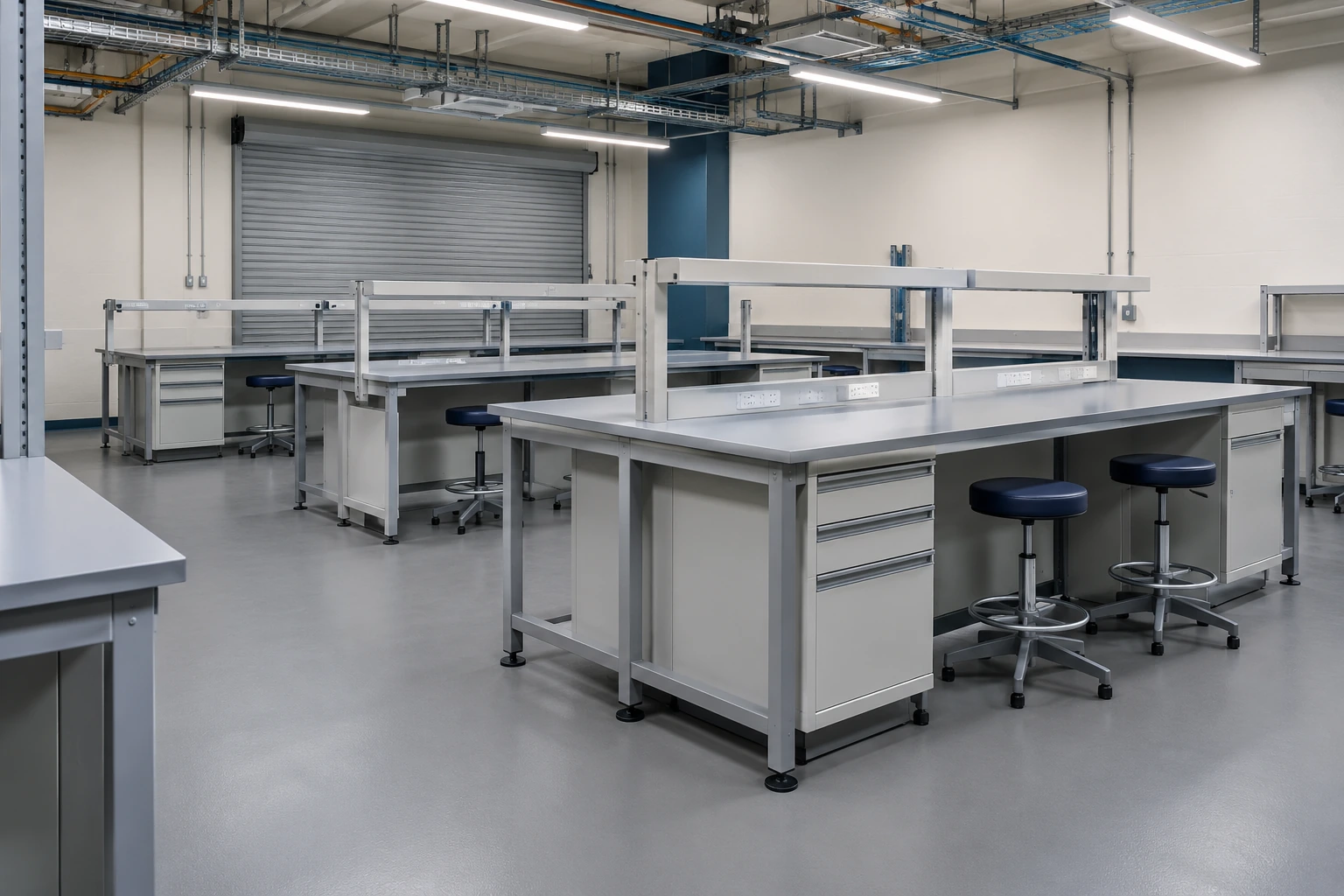
Hard floors in Santa Clara buildings show how each property is used. Hotel and event lobbies often feature stone at the entrance. Tech campus breakrooms and lab corridors lean on resilient tile that takes rolling carts and chairs. Retail floors carry grit straight in from the parking lot, and R&D buildings often run concrete through service corridors.
Each of those floors gets its own plan. Vinyl composition tile (VCT) moves between burnishing, recoating and a periodic strip and wax, where the worn finish comes off down to bare tile and fresh coats go back on. Concrete in service corridors or loading areas is machine scrubbed to lift ground-in soil and tire marks. Marble and terrazzo lobbies get stone care: cleaning with products made for the stone, then polishing to bring the shine back. Daily mopping on recurring visits sits underneath all of it and slows how quickly the finish wears.
Building a floor care calendar
A floor care calendar layers three cycles. Routine mopping or scrubbing happens on regular janitorial visits. Burnishing or polishing restores shine on a shorter periodic cycle for floors that take heavy traffic. Recoating, or a full strip and wax for suitable resilient floors, comes around least often, once the finish itself has worn thin.
The calendar starts with the busiest zones. Main entrances, lobbies and breakrooms come first, corridors next, and low-traffic rooms last. Spreading larger projects across several nights avoids one long shutdown, and each zone closes only for the hours its treatment takes.
Preparing a floor for treatment
A treatment night goes faster when the floor is clear. Chairs, bins, mats and boxes come off the area being worked, and the crew needs to know which rooms must reopen first in the morning. Return-to-use timing is set before work begins, so occupants know when each zone is ready to walk on.
Entry mats deserve a mention too. A good mat at each door catches grit before it reaches the finish, and keeping mats clean on every visit stretches the time between burnishing and recoating.
Floor care pricing for Santa Clara hard floors
Walk the floors with us on a free walkthrough and point out where the finish has dulled or worn through. We’ll recommend a treatment for each surface and quote the work around your reopening hours.
Strip-and-refinish work on resilient tile typically costs $0.49 to $1.00 a square foot in Santa Clara, priced per job with a minimum charge for small areas. Big open floors in fair shape start near $0.38. Badly built-up finish, stone and other restoration work climbs as high as $3.00. These are current 2026 market figures for the area.
A 2,800-square-foot breakroom and corridor strip and refinish at $0.72 comes to $2,016 for the job. Burnishing between refinishes holds the shine longer, so a calendar of one full strip a year plus scheduled recoats spreads the work across twelve months.
Floor type and condition set the rate. Vinyl composition tile buried under years of old finish takes longer to strip than tile that was kept up. Concrete scrubbing, natural stone care and burnishing each price on their own scale. Moving furniture, working around production or lab schedules, night or weekend timing so floors cure before people return, and small rooms that hit the minimum all shift the total. A walkthrough confirms the surface, its condition and the right treatment, and the quote follows from that. The cost guide puts floor work next to the nightly rates.
Questions about floor care
How soon can people walk on a treated floor?
Burnished floors are ready right away. Recoats and a strip and wax are booked overnight or on a weekend, and each zone gets its return-to-use time before work starts.
Can floor care be done zone by zone?
Yes. Treatments can be scheduled area by area to keep the building in use.
Do different hard floors get different treatments?
Yes. Concrete is scrubbed, resilient floors can be recoated, burnished or stripped and waxed, and stone receives care suited to its material.
How is burnishing different from recoating?
Burnishing polishes the existing finish back to a shine. Recoating lays down a fresh layer of finish once the old one has thinned.
Is floor cleaning part of regular janitorial service?
Yes. Routine mopping and vacuuming happen on each janitorial visit, while scrubbing, burnishing and recoating are booked as periodic floor care.
Can floors be treated overnight?
Yes. Night and off-hours visits run zone by zone, planned around the hours you need each area back.
Resources