
Day Porter Service
Day porter service in Santa Clara
Keep your Santa Clara lobby presentable through the visitor rush and restrooms stocked through lunch. A day porter makes rounds while your building is open, restocking, wiping and cleaning up spills.
What a porter handles during the day
Porters restock restrooms, wipe counters and glass, empty bins and clean up spills while your building is busy.
Recurring janitorial service handles the full room cleaning, and floor treatments are booked separately.
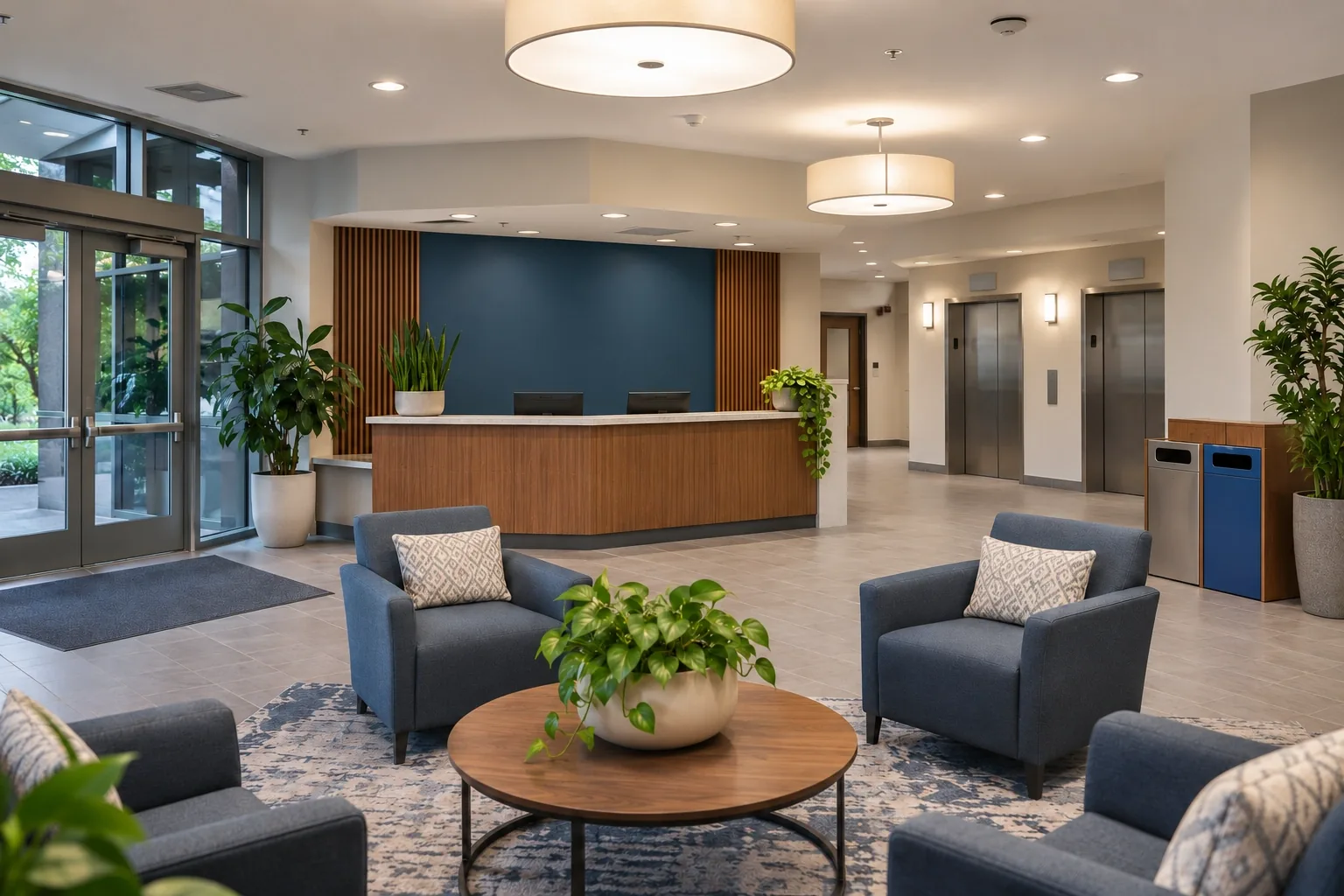
Technology campuses and multi-tenant buildings host visitors all day. Porters keep lobbies, entrances and shared restrooms looking fresh between full cleanings.
Where porters spend their day
A porter’s day is shaped by the building’s traffic. Lobbies and entrances get attention as visitors arrive, shared restrooms are checked and restocked through the day, and breakrooms are wiped down after the lunch rush. Spills are handled as they happen.
This works especially well on technology campuses and in multi-tenant buildings with steady visitor traffic. Porters handle the daytime touch-ups, while recurring janitorial visits take care of the full building. Tenants in Santa Clara office parks can pair the two.
Building a porter route
A porter works from a route, not a guess. During setup we list the stops in order: main entrance, lobby seating, elevator landings, each shared restroom, breakrooms and any conference center that hosts visitors. Every stop carries its own tasks, such as restocking, spot wiping or emptying bins, and the route repeats through the shift.
The route bends around the building’s rhythm. Restroom checks come closer together around mid-morning and after lunch, entrance glass gets attention when rain or visitor traffic picks up, and breakroom stops cluster around meal times. The porter also takes the unplanned call, from a spilled coffee in the lobby to an overflowing bin in a shared kitchen.
Choosing porter hours
Coverage follows occupancy. A Santa Clara campus that hosts visitors from morning to evening needs a porter through the full business day. A multi-tenant building whose rush comes at opening and lunch covers those peaks with a shorter shift. For hotels and event spaces, porter hours can follow the times guests are moving through.
Start with the peak hours and widen the shift if lobbies and restrooms still slip between rounds. The porter’s notes from the first weeks show which stops need more time and which can drop to fewer checks.
How porters and the evening crew work together
The porter and the evening crew share one task list: the porter keeps lobbies and restrooms presentable during the day and passes anything bigger, such as a stained carpet patch, to the night visit or to carpet cleaning. Our day porter and nightly crew guide compares the two in full.
Day porter vs. night janitor
A night janitor works after the building empties and does the full clean: vacuuming every room, mopping hard floors, cleaning restrooms top to bottom, emptying every bin and resetting kitchens. A day porter works while people are on site and keeps that result in place through the day, restocking, spot wiping, clearing spills, tidying the lobby and taking the call when something goes wrong at two in the afternoon.
Use both when restrooms run low or the lobby needs attention before the night crew returns. The night visit handles the work that needs empty rooms and machines, and the porter covers the hours when foot traffic undoes it. A building with light daytime use often runs well on nightly janitorial service alone, while a campus lobby with steady visitors adds a porter for its peak hours.
What a Santa Clara day porter costs per hour
Day porters bill by the hour. In Santa Clara, 2026 market rates put the usual porter at $30 to $38 an hour. A single porter on a simple lobby-and-restroom route starts near $29, and coverage that spans a multi-building campus reaches $39.
Hours times rate gives the month. One porter working six hours a day, five days a week, covers about 130 hours a month; at $35 an hour, that comes to $4,550. A lunch-rush shift of three hours a day runs about half that, near $2,275.
Porter hours, not square feet, drive this bill. Longer shifts, a second porter for a crowded multi-tenant lobby, weekend coverage and routes that cross several buildings raise it. Tasks count as well: restroom restocking, kitchen resets after lunch and spill response across a large campus take more time than lobby glass alone. Union wage rates start from a higher base. A single building with one lobby and two restrooms keeps the hours short. A walkthrough maps the route, and the quote lists the hours it needs; the Santa Clara cost guide shows porter hours beside nightly rates.
Questions about day porter service
Does porter service replace nightly cleaning?
No. A porter handles daytime upkeep, and the night crew still does the full clean.
Can visits focus on the busiest areas?
Yes. Lobbies, shared restrooms, and heavily used gathering areas can be the focus of daytime service.
Can porters keep a campus lobby presentable for visitors?
Yes. Lobby and entrance upkeep is a core porter task during busy hours.
Can a porter cover several shared restrooms?
Yes. Porter rounds can include every shared restroom in the building, checked and restocked through the day.
Can a Santa Clara porter shift widen for events or busy weeks?
Yes. Porter hours can grow for a product launch, an all-hands meeting or a holiday week, then return to the usual shift once traffic settles.
How do you price day porter coverage in Santa Clara?
By the hour. Shift length, the number of porters, the days covered and the stops on the route set the hours, and Santa Clara porter rates in 2026 run $30 to $38 an hour.
What tasks does a day porter handle?
A day porter keeps common areas presentable while the building is open, restocking restrooms, wiping counters and glass, emptying bins and handling spills as they happen.
Can day porter service start with a few hours a day?
Yes. A short shift can cover the morning arrival and lunch peaks first, then grow if the building calls for more coverage.
Do porters work in hotels and event spaces?
Yes. Porter hours can follow arrivals and breaks so lobbies and restrooms stay fresh for guests.
Services